Let’s be honest — most people keep their oil right next to the stove. People find it easy to reach their cooking oil because its location provides them with quick access to it. The area where people want to store their oil represents one of its worst possible storage locations.
The environment maintains high temperature levels which exist together with the oil because both elements keep operating at their normal functioning level. The real Italian olive oil will undergo a gradual transformation because of its continuous exposure to high temperatures despite you not experiencing any heat.
The product will maintain its quality until it reaches its expiration point but its taste will undergo changes. The flavor of true Italian olive oil will be more noticeable to you because its taste is already more sophisticated to begin with.
You should choose another solution which requires only a small distance from its current position. You should move the object away from direct heat but maintain its position near the current area.
Light Is Sneaky
Light might appear to be insignificant but it creates major issues. You will observe that Italian olive oils are stored in dark bottles because producers use these containers to protect their products. The design serves more than aesthetic purposes because it provides protection to the oil inside the bottle.
Direct exposure to sunlight and intense kitchen lights which stay on throughout the day will still impact the bottle contents. You don’t need a special setup. Just keep it inside a cabinet or a shaded corner. That’s enough.
Air Slowly Changes It
This one is easy to ignore. You open the bottle, pour some oil, and sometimes leave it open for a bit. It doesn’t feel like a big deal.
But air exposure adds up. Every time it’s open, the oil reacts slightly. Over time, that’s what makes it taste dull or a bit off.
So yeah, nothing complicated here — just close it properly. That one habit actually helps more than people think.
Don’t Treat It Like Something That Lasts Forever
A lot of people use olive oil very slowly. Especially when it’s a good one. They think, “I’ll save it.”
But olive oil isn’t like wine. It doesn’t get better with time.
Even the best Italian olive oil is meant to be used while it’s fresh. The longer you keep it, the more the flavor fades.
So instead of saving it too much, just use it normally. That’s what it’s for.
The Bottle It Comes In Is There for a Reason
Sometimes people transfer oil into fancy glass containers. It looks nice on the kitchen shelf.
But if that container is clear, it’s not really helping the oil.
The original bottle is usually designed to protect it. Especially if it’s dark glass.
If you really want to transfer it, at least use something that blocks light. Otherwise, you’re just exposing it more.
Your Kitchen Setup Matters More Than You Think
Every kitchen is different.
Some are cooler, some get a lot of sunlight, and some stay warm because of cooking. All these things affect where you should keep your oil.
There’s no perfect spot for everyone. But once you notice where heat and light are strongest in your kitchen, you can easily pick a better place.
It’s more about awareness than rules.
You Can Actually Taste the Difference
This is the interesting part.
When olive oil is fresh and stored properly, it has a certain smell and taste. It feels “alive” in a way — not flat.
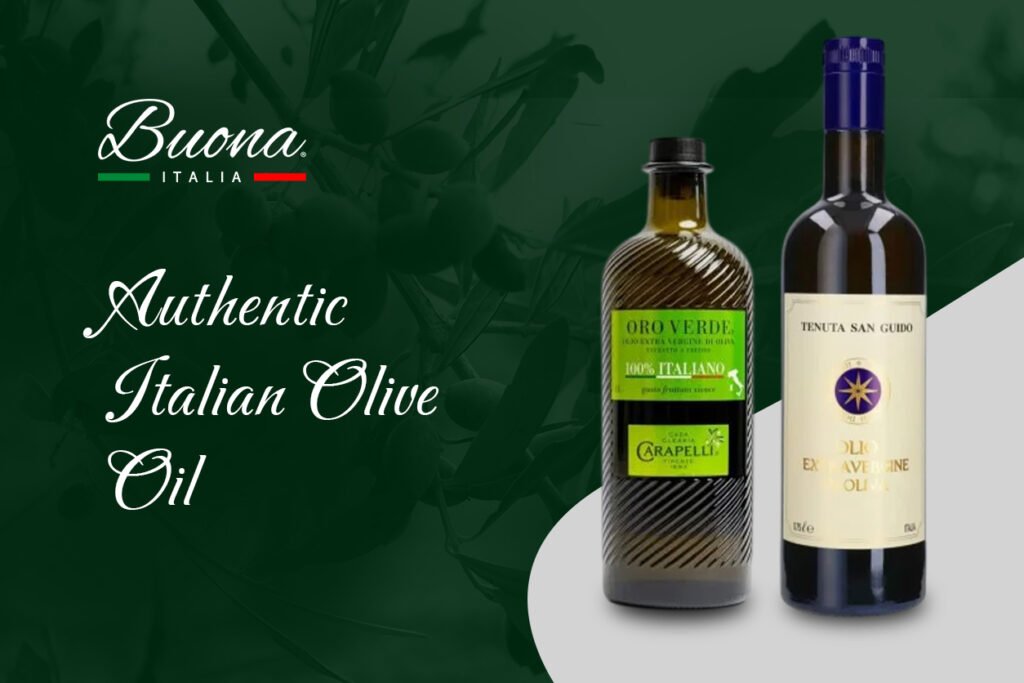
But when it’s been sitting in heat or light for too long, it changes. Not always in a bad way, but definitely not the same.
If you’re using authentic Italian olive oil, the difference becomes more noticeable.
Don’t Overthink It
A lot of people think storing olive oil properly means doing something special or complicated.
It really doesn’t.
Just:
- Don’t keep it near the heat
- Don’t leave it in strong light
- Close it properly
- Use it while it’s fresh
That’s it.
Final Thoughts
The process of using real Italian olive oil reaches its most challenging point at this moment. The task now requires you to maintain the product according to its intended state.
The way you store the bottle together with your handling methods creates actual effects that other people can observe.
The activity becomes automatic after you practice it until you reach complete understanding. Your daily activities will include this new element as a permanent addition.
FAQs
Why is real Italian olive oil more expensive?
It costs more because of better olives, careful production, and strict quality control. Authentic Italian olive oil is made with attention to detail, which adds to its value.
Which is the best Italian olive oil for cooking?
The best Italian olive oil for cooking depends on use. Extra virgin is great for salads and light cooking, while refined options may be better for high-heat cooking.
Can I trust labels that say “Made in Italy” on olive oil?
Not always. “Made in Italy” can sometimes mean it was bottled there, not produced. Always check for more detailed origin information when choosing Italian olive oils.
Can I use the best Italian olive oil for frying?
Yes, but it depends on the type. Some olive oils work for light frying, but very high heat may affect flavor and quality.
Why are there so many types of Italian olive oils?
Different olives, regions, and production methods create different flavors and qualities. That’s why you’ll find many varieties of authentic Italian olive oil.
Is organic Italian olive oil better?
Organic options avoid certain chemicals, which some people prefer. Whether it’s better depends on personal choice, but many see organic, real Italian olive oil as a cleaner option.