We’ve all been there, really. A wedge of “Parmesan” from the supermarket, grated over the spaghetti, tasting mostly of salt and not much else — maybe a faint note of cardboard if you’re being generous. Then someone passes you a piece of the real thing at a dinner party, and it clicks why people go on about it.
Pecorino Romano runs into the same trap. Generic “Romano” in a carbonara and the sauce turns grainy and flat. Swap in proper Pecorino and it goes silky, sharp, almost a little feral. Not even in the same category.
So where do you find the good stuff in the US without flying to Italy? Let’s go through it.
How to Buy Parmigiano Reggiano Without Getting Fooled
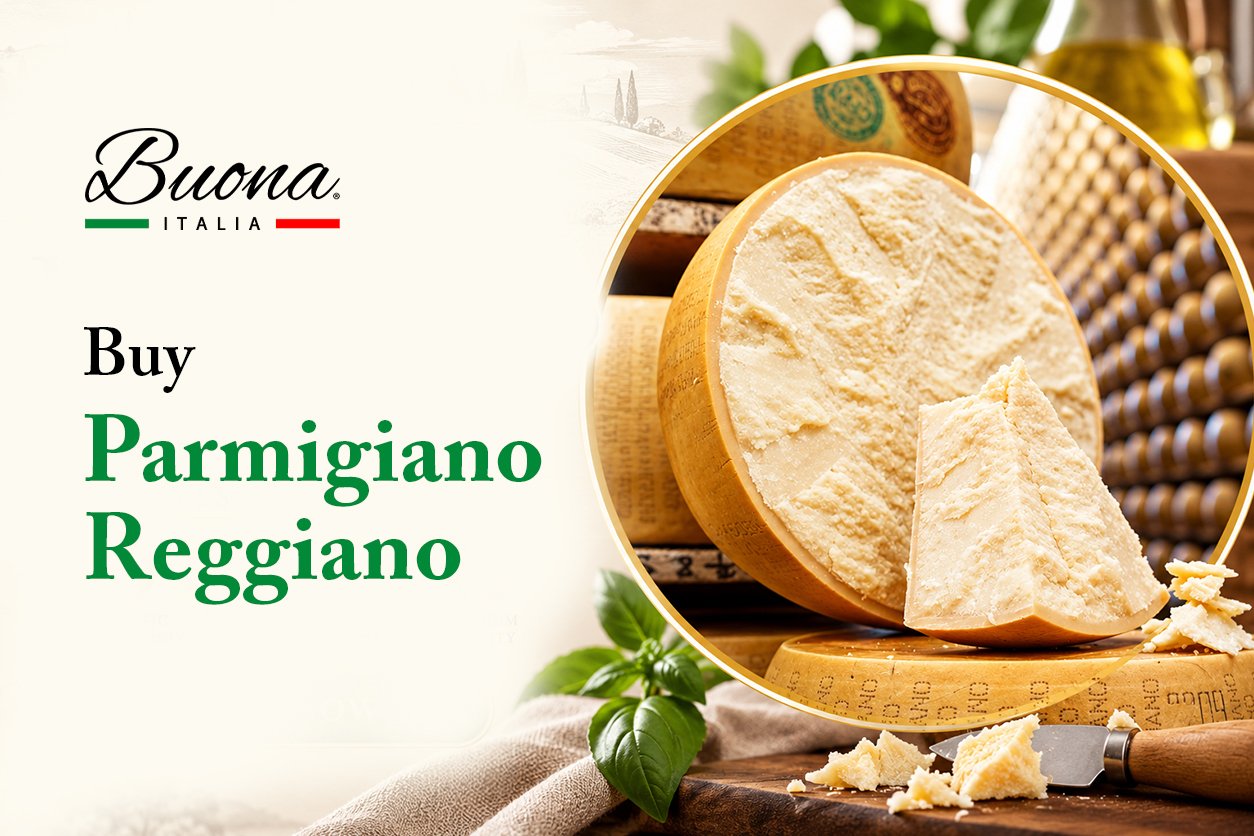
“Parmesan” in an American store can mean almost anything. There’s no rule stopping a factory in Wisconsin from using the name. Parmigiano Reggiano is another story. It carries PDO status, short for Protected Designation of Origin. That means it can only come from one small corner of northern Italy, it has to follow a strict old recipe, and it must age at least 12 months before anyone can sell it.
The easiest check when you buy Parmigiano Reggiano is the rind. Genuine wheels are covered in the words “Parmigiano Reggiano,” pressed in as little pin dots. If your wedge has a bit of rind with those dots on it, you’re in good shape. If the label says “Italian style,” put it back.
Our Pick: Malandrone 1477 Parmigiano Reggiano for Sale
The Parmigiano Reggiano for sale on our site comes from a dairy called Malandrone 1477. They’re up in the Frignano mountains, in the province of Modena, roughly 700 meters above sea level. Cooler air, mountain grass, slow aging. All of that ends up in the cheese.
We like them because they do almost everything themselves. Their milk comes from about 150 Holstein Friesian cows that were born on the farm and never left it. The hay and feed are grown within around 6 km. They don’t chill the milk before making the cheese, they keep the rennet low, and nobody rushes anything. A lot of dairies cut corners to get more cheese out of the same milk. These folks clearly don’t.
Picking an Age
You can pick anything between 26 months and 120 months. Ten years, in other words, which still surprises people.
At 26 or 36 months it’s milky and buttery, with a fresh, grassy edge, and it’s perfect for grating over pasta every night of the week. Around 48 to 60 months it gets nuttier, with almond and walnut in there. Break it into chunks and eat it with a glass of red wine. Push on to 72 or 96 months, and you’ll pick up dried mushroom, dried fruit, a hint of nutmeg, even something close to a rich broth. The 120-month cheese is a whole experience: spice, cocoa, a toasty finish. Save that one for when you want to show off a little.
None of them burn your tongue, by the way. Old Parmigiano isn’t harsh. It just gets more complex. Pieces go from about 0.66 lb up to 10 lb, and right now prices start at $49.90.
Where Can I Buy Parmigiano Reggiano That’s Actually Fresh?
Type where can I buy Parmigiano Reggiano into Google, and half the results send you to big chain stores. Nothing wrong with that, except the cheese has often been sitting under cling film for weeks. Once a wheel is cut open, the pieces start drying out. Slowly, sure, but it happens.
A specialty Italian shop usually sells through its stock faster. More importantly, it can tell you which dairy made the cheese. We’d honestly treat that as a dealbreaker. No producer name, no sale.
What to Check Before Ordering Parmigiano Reggiano Cheese for Sale
Look for the PDO mark first. Then see if the seller tells you the age in months, because the word “aged” by itself tells you nothing. A named dairy is the next thing. And give a quick thought to shipping. Hard cheese travels well, but you still want it packed properly and not stuck in a warehouse for ten days.
Find Parmigiano Reggiano cheese for sale that passes all of that and you’re very likely holding the genuine article.
Now, About Pecorino Romano
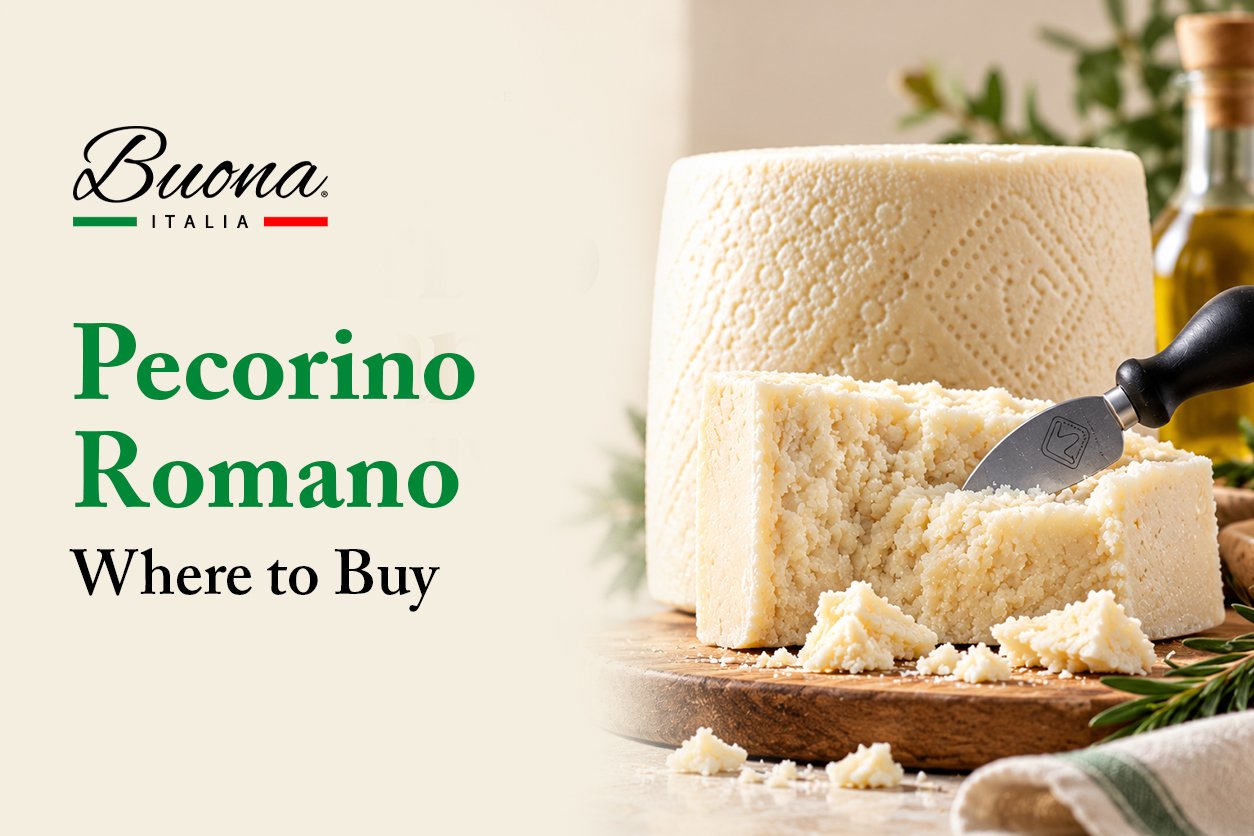
Pecorino Romano is the saltier, punchier relative. It’s made from sheep’s milk, not cow’s milk, and it has its own PDO protection. Legally it can only be made in Lazio (the area around Rome), Sardinia, and the province of Grosseto in Tuscany. Oddly enough, most of it is now made in Sardinia, not near Rome at all.
Every big Roman pasta needs it. Carbonara, amatriciana, cacio e pepe, gricia. You can use Parmigiano instead, and the dish will still be tasty. It just won’t taste like Rome.
Sorting Out Pecorino Romano Cheese Where to Buy Questions
Usually when someone searches pecorino romano cheese where to buy, they’ve already been let down by the shaker-tub version. A lot of that “Romano” is made with cow’s milk and has very little to do with the original.
So check the label. It should say Pecorino Romano PDO and mention sheep’s milk. Open the pack and the cheese should look pale and firm. It should crumble when you cut it and smell sharp and salty straight away.
Ours is a Pecorino Romano PDO from the Rome area, listed at $45.00 at the moment. Grate it fresh into amatriciana or whisk it with egg yolks for carbonara and you’ll see why Romans won’t use anything else.
Comparing Options for Pecorino Romano Where to Buy
Shopping around for pecorino romano where to buy? Price per pound matters, obviously, but it isn’t everything. A block will always beat pre-grated cheese, since it lasts longer and keeps its flavor. The PDO mark and region should be easy to find on the page. It also helps if the shop sells other Italian cheeses, so you can put one order together. We stock Pecorino Toscano and Grana Padano too, which makes it easier to reach free shipping.
Storing Your Cheese Once It Arrives
Wrap each piece in wax or parchment paper first, then a loose layer of plastic, and keep it in the vegetable drawer. Cheese wrapped tight in cling film can’t breathe and starts to sweat. Take it out half an hour before you eat it so the flavor wakes up. Oh, and keep your Parmigiano rinds. Drop one into minestrone or a pot of beans and thank us later.
We ship anywhere in the US and Canada. Orders over $99 come with a free gift, and anything over $199 ships free. Grab both cheeses and you’re most of the way there.